Top 10% performers: What successful attractions do differently
eBooks


Why do some experience providers operate steadily year-round, while others struggle with seasonal slumps, empty time slots, or stagnant revenue? Our analysis reveals that the top 10% of performers don’t just act operationally — they work with structure.
In this post, we’ll show you how to map your business strategically, identify key growth levers, and take targeted steps to evolve your offering.
For those who want to dive deeper: You’ll find a link to the free e-book, including a practical workshop template, at the end of this article.
From gut feeling to structure
Many attractions have grown organically over the years with new tours, experiences, events, or locations added along the way. But as the offering expands, it’s easy to lose track. Some products perform better than others, yet without a clear system in place, managing the overall business becomes inefficient.
Top performers take a different approach. They don’t see their experience business as a loose collection of offerings. Instead, they organize it strategically, based on target groups, booking channels, and experience types. This helps them spot growth opportunities early and fine-tune the levers that drive long-term success.
Position your experience business strategically
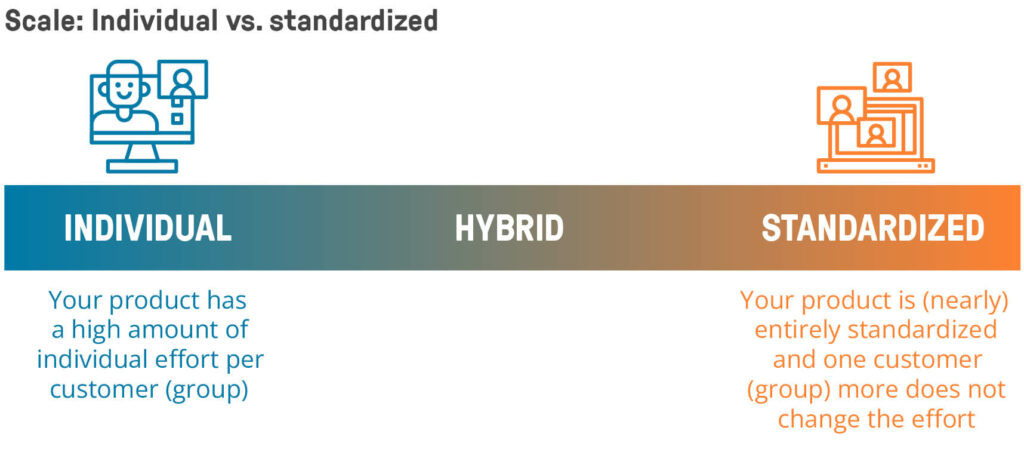
Whether you’re focused on tourists or locals, whether your offerings are customized or standardized – many providers operate somewhere in between. But without a clear sense of where you stand, it’s hard to grow with focus.
A simple matrix helps you map your position in the market – and reveals the levers you can pull to boost utilization, increase repeat visits, or improve your margins.
Because: when you know where you stand, it’s easier to decide where you want to go.

Strategic positioning: Your matrix for greater clarity
How can you systematically classify your range of experiences? The bookingkit matrix is based on two key dimensions:
1. Your target audience:
Are your visitors mainly from the region or are they tourists?
2. Your offer style:
Do you offer individually tailored experiences or more standardized formats?
Four fields, four strategies: Find your place in the market
| Standardized offering | Customized offering | |
| Tourist guests | Group tours, hop-on hop-off, museums | Personal tours, exclusive tastings |
| Domestic guests | Escape Rooms, Jump Houses, Indoorspielplätze | Workshops, creative courses, club meetings |
Each of these categories comes with its own set of requirements for booking systems, internal processes, team structure, or marketing. The key takeaway? There’s no right or wrong category. What matters is choosing the strategy that fits your location and your offering.
In the next section, we’ll break down each category and share tailored recommendations you can apply right away.
From Insight to Action: Tailored tips for your attraction type
Depending on where your experience offering falls within the matrix, you’ll find different opportunities and strategic priorities. Here are practical tips for each category:
1. Standardized offer + tourist guests
Example: City tours, hop-on hop-off, museums
Focus on visibility and sales: These formats benefit greatly from OTA platforms, city cards, and hotel partnerships. Optimize your online and local visibility.
2. Individual offer + tourist guests
Example: Private city tours, exclusive tastings
Focus on high quality and advance bookings: Present your offer professionally, emphasize the experience value, and enable easy online bookings—ideally before arrival.
3. Standardized offering + local guests
Example: Escape rooms, indoor playgrounds, trampoline parks
Take advantage of local reach and repeat customer rates: Ensure high frequency through flexible booking times, attractive subscription or seasonal models, and a strong presence in local marketing.
4. Individual offer + local guests
Example: Workshops, creative courses, club formats
Strengthen customer loyalty and plan ahead: Offer regular formats or course series, communicate clearly, and focus on personal support—both online and offline.
Ready for the next step?
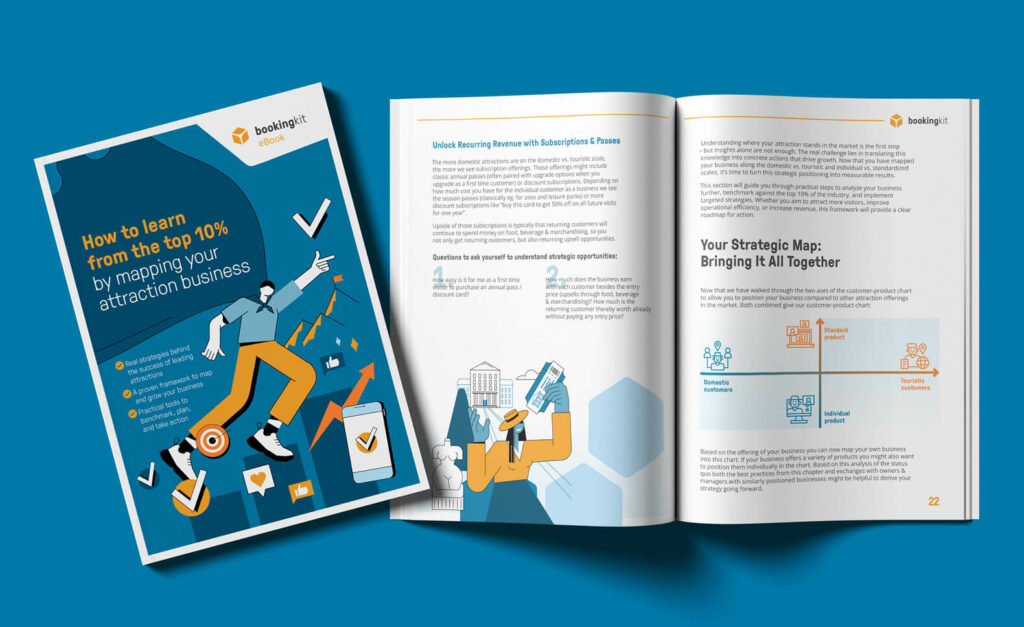
By correctly categorizing your experience offering, you lay the foundation for sustainable growth. The matrix helps you gain clarity – but it’s only the beginning.
In our free e-book, we show you step by step how to strategically analyze your offering, identify growth levers, and derive concrete measures from them. Includes a workshop template for direct application.

Frank Scheibe
Frank is a tours and activities industry expert. He reports on the latest facts, figures and trends in the bookingkit blog and the bookingkit newsletter. In his free time, he enjoys spending time with his kids and family, playing sports and eating good food.
Want to learn more about how bookingkit can help you drive conversions and get more bookings on your website?
Then get your free demo now.
Related articles

Press Release
bookingkit and ToucanTix Launch Strategic Partnership
Seamlessly Connecting On-Site Operations with Global Online Distribution bookingkit, Europe’s leading SaaS solution for the tours, attractions, and activities (TAA) sector, announces its successful system integration with ToucanTix, the 360° ticketing platform for experience providers This ...
Press Release
bookingkit Leisure Market Index – January 2026
Strong start to 2026: Revenue growth continues as operators shift toward value-driven efficiency Each month, bookingkit analyses aggregated booking and revenue data from thousands of leisure providers across Europe The latest insights for January 2026 indicate a positive start to the year: ...
Press Release
bookingkit Leisure Market Index – December 2025
Record-breaking Q4 2025 confirms the end of seasonality and marks a new phase of year-round profitability Each month, bookingkit analyses aggregated booking and revenue data from thousands of leisure providers across Europe The latest insights for December and the full fourth quarter of ...
Press Release
bookingkit Leisure Market Index – November 2025
Leisure demand stabilises as prices hold and operators enter a new “efficiency phase” Each month, bookingkit analyses aggregated booking and revenue data from thousands of leisure providers across Europe The latest insights for November show a market that is now settling into ...

Uncategorized
Season Passes & Gift Vouchers: Your key to more off-season sales
During the off-season, many attractions see fewer visitors, lower revenue, and less planning certainty Relying on peak season alone means leaving valuable potential untapped Smart pre-sales products like season passes and gift vouchers can change that: they create incentives for repeat visits, ...

eBooks
Top 10% performers: What successful attractions do differently
Why do some experience providers operate steadily year-round, while others struggle with seasonal slumps, empty time slots, or stagnant revenue Our analysis reveals that the top 10% of performers don’t just act operationally — they work with structure In this post, we’ll show you ...